
For more than a decade, manufacturers have been working toward the vision of Industry 4.0—connecting machines, digitizing processes, and enabling data-driven operations through Industrial IoT and smart factory technologies.
The next phase, Industry 5.0 manufacturing, expands this vision further. It focuses on building human-centric, sustainable, and resilient manufacturing systems, where people, machines, and intelligent digital systems collaborate seamlessly to improve productivity and operational decision-making.
However, many manufacturers still ask a practical question:
What does it actually take to move toward Industry 5.0?
The answer is not a single technology or platform. Instead, it requires building a set of digital capabilities that enable real-time visibility, operational intelligence, and adaptability across manufacturing operations.
Below are the key areas manufacturers should focus on when planning their smart factory transformation toward Industry 5.0.

1. Build a Real-Time Operational Data Foundation
Many factories still operate with fragmented data spread across multiple systems, including:
- ERP platforms
- MES applications
- PLC controllers
- Quality management systems
- Manual registers and spreadsheets
This fragmentation makes it difficult to understand what is happening on the shop floor in real time.
Industry 5.0 environments require a unified operational data layer that continuously streams machine and process data across the factory.
Key capabilities include:
- Machine connectivity across PLCs and legacy equipment
- Real-time data streaming from production lines
- Event-driven architecture for operational alerts
- Unified dashboards for plant visibility
- Integration with ERP and enterprise systems
2. Enable Human–Machine Collaboration
Contrary to common assumptions, Industry 5.0 is not about replacing humans with automation.
Instead, it focuses on augmenting human capabilities using intelligent systems.
In modern factories, operators, supervisors, and technicians should be supported with systems that provide the right insights at the right time.
Examples include:
- Operator guidance systems
- Digital work instructions
- Smart alerts based on machine conditions
- AI-assisted troubleshooting
- Maintenance decision-support tools
The objective is simple: empower people to make faster and better operational decisions.
3. Turn Industrial Data into Operational Intelligence
Over the last decade, many factories have begun collecting machine data. However, data collection alone does not create value.
Industry 5.0 requires the ability to convert raw data into actionable operational intelligence.
This includes capabilities such as:
- Predicting production bottlenecks before they occur
- Identifying margin erosion in manufacturing operations
- Detecting process deviations early
- Monitoring asset health continuously
- Predicting potential downtime
These capabilities become more meaningful when applied to real manufacturing scenarios. The following examples illustrate how Industry 5.0 technologies are already being used to improve factory operations.
Key Industry 5.0 Use Cases in Manufacturing
While Industry 5.0 is often discussed as a strategic vision, many of its capabilities are already being applied in modern factories. These use cases show how connected systems, operational intelligence, and human–machine collaboration can improve manufacturing performance.
a. Predictive Maintenance for Critical Equipment
Unplanned equipment downtime can significantly disrupt production schedules and increase operational costs. By collecting real-time machine data such as vibration, temperature, and performance metrics, manufacturers can detect early signs of equipment degradation.
Predictive maintenance systems analyze these signals and alert maintenance teams before failures occur. This allows organizations to schedule maintenance proactively, reduce unexpected downtime, and improve overall equipment reliability.
b. Real-Time Production Monitoring and Bottleneck Detection
Manufacturing teams often struggle with limited visibility into what is happening on the shop floor at any given moment. With real-time connectivity across machines and production systems, factories can continuously monitor production output, capacity utilization, and line performance.
Supervisors can quickly identify production bottlenecks, detect process deviations, and take corrective action before they affect production targets. This improves operational efficiency and ensures smoother production flow.
c. Energy Monitoring and Sustainability Optimization
Energy consumption represents a major cost and sustainability challenge for many manufacturers. Industry 5.0 systems enable factories to monitor energy usage across machines, production lines, and facilities in real time.
By analyzing energy consumption alongside production data, manufacturers can identify inefficiencies, optimize machine usage, and reduce their environmental footprint while maintaining productivity.
4. Build Resilient Manufacturing Systems
Recent global disruptions have highlighted the importance of resilience in manufacturing operations.
Industry 5.0 emphasizes building factories that can adapt quickly to unexpected events.
Manufacturers should focus on:
- Real-time production monitoring
- Predictive maintenance for critical equipment
- Visibility into supply chain dependencies
- Workforce availability tracking
- Scenario-based operational planning
A resilient factory can detect risks early and adjust operations before production is impacted.
5. Integrate Sustainability into Daily Operations
Sustainability is becoming a core pillar of modern manufacturing.
However, in many organizations, sustainability initiatives remain disconnected from daily operational systems.
Industry 5.0 encourages manufacturers to embed sustainability directly into operational workflows.
Key capabilities include:
- Energy monitoring across machines and production lines
- Resource consumption tracking
- Waste monitoring and reduction
- Carbon footprint measurement
- Process optimization for energy efficiency
When sustainability metrics are integrated with operational data, factories can continuously improve both productivity and environmental performance.
6. Capture and Digitize Operational Knowledge
One of the biggest risks in manufacturing today is the loss of tribal knowledge when experienced operators and technicians retire.
Much of the practical knowledge about machines, processes, and troubleshooting remains undocumented.
Industry 5.0 systems should focus on capturing and digitizing this knowledge through:
- Digital maintenance logs
- Knowledge capture platforms
- AI-assisted documentation tools
- Digital troubleshooting guides
By preserving operational knowledge digitally, organizations can accelerate training and ensure operational continuity.
7. Build an Open and Scalable Industrial Digital Architecture
Many factories struggle with digital transformation because their systems are built in closed, proprietary environments.
Industry 5.0 ecosystems require open and scalable architectures that allow systems to interact seamlessly.
Important architectural principles include:
- Industrial IoT connectivity
- Messaging-based integration
- API-driven platforms
- Edge-to-cloud architectures
Such architectures allow manufacturers to adopt new technologies incrementally without disrupting existing operations.
8. Start with Operational Use Cases — Not Technology
One of the most common mistakes in digital transformation initiatives is starting with technology instead of business problems.
Industry 5.0 adoption should begin by identifying specific operational challenges. Focusing on real-world issues first ensures that digital initiatives deliver measurable value and align with business objectives.
Examples of operational use cases include:
- Identifying production plans that may not be met this week
- Detecting when key operators are unavailable and schedules may be impacted
- Monitoring energy consumption across production lines
- Predicting machine failures before downtime occurs
- Improving operator productivity with better insights
Mapping out the right operational use cases helps manufacturers prioritize investments, plan implementation steps, and prepare the organization for the changes that Industry 5.0 brings.
Note:
For manufacturers looking for a step-by-step guide to plan and implement these changes, our Smart Manufacturing Roadmap eBook provides practical insights on turning operational challenges into a clear, actionable plan for a connected, data-driven factory.
This ensures your Industry 5.0 journey starts with the right priorities and lays a strong foundation for long-term success.
Enabling the Foundation for Industry 5.0
While the vision of Industry 5.0 is compelling, the transition does not begin with advanced AI or robotics.
It begins with building a real-time digital backbone that connects machines, systems, and people.
Many factories still face challenges such as:
- Machines operating in isolated silos
- Limited real-time visibility into shop floor operations
- Fragmented data across ERP, MES, and machine systems
- Manual processes bridging digital gaps
Without solving these foundational challenges, advanced capabilities like predictive intelligence and human-machine collaboration remain difficult to achieve.
Building the Real-Time Industrial Data Infrastructure
At Bevywise Networks, we help manufacturers build the real-time operational data infrastructure required for modern factories.
Our industrial IoT and messaging platforms enable:
- Secure connectivity across machines, PLCs, and sensors
- High-throughput MQTT-based communication for industrial environments
- Real-time event streaming from shop floor to enterprise systems
- Scalable edge-to-cloud architectures
- Seamless integration with MES, ERP, and analytics platforms
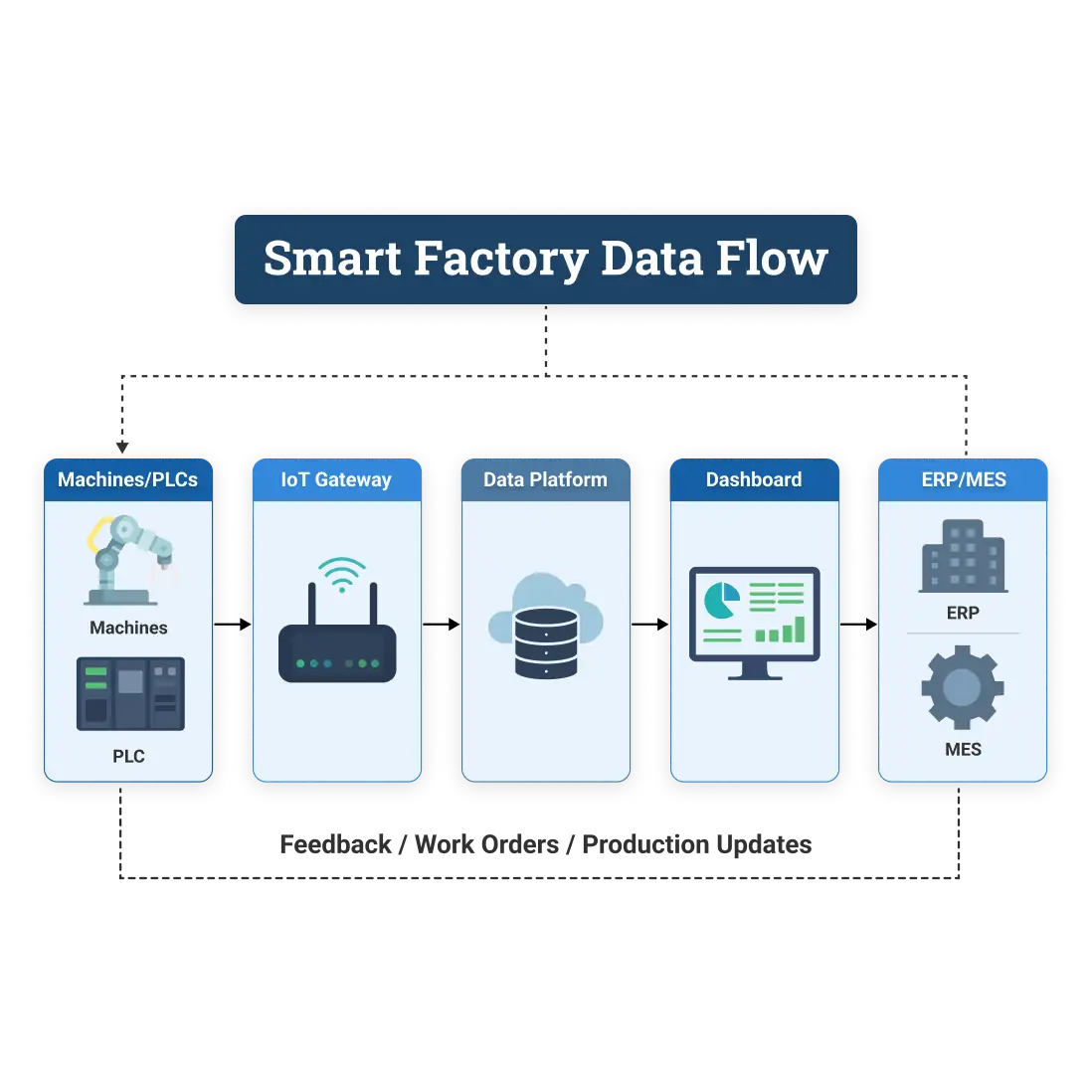
By enabling machines and applications to communicate through a reliable real-time messaging infrastructure, manufacturers can begin building the capabilities required for the next generation of factories.
If your organization is looking to connect machines, integrate factory systems, or build a real-time operational data backbone, our team can help you evaluate the right approach and support your Industry 5.0 transformation.
Key Takeaways
- Industry 5.0 focuses on human-centric, resilient, and sustainable manufacturing, where people and intelligent systems work together to improve operations.
- A real-time operational data foundation is essential for connecting machines, systems, and enterprise applications.
- Operational intelligence enables proactive decision-making, helping manufacturers predict downtime, detect bottlenecks, and optimize processes.
- Sustainability and resilience must be integrated into daily operations, including energy monitoring and resource optimization.
- Successful Industry 5.0 initiatives start with clear operational use cases, supported by scalable digital architectures.
The Road Ahead for Industry 5.0 Manufacturing
Industry 5.0 will not be defined only by smarter machines.
It will be defined by how effectively factories connect data, systems, and people into a coordinated operational ecosystem.
And that journey begins with building the right digital foundation.
